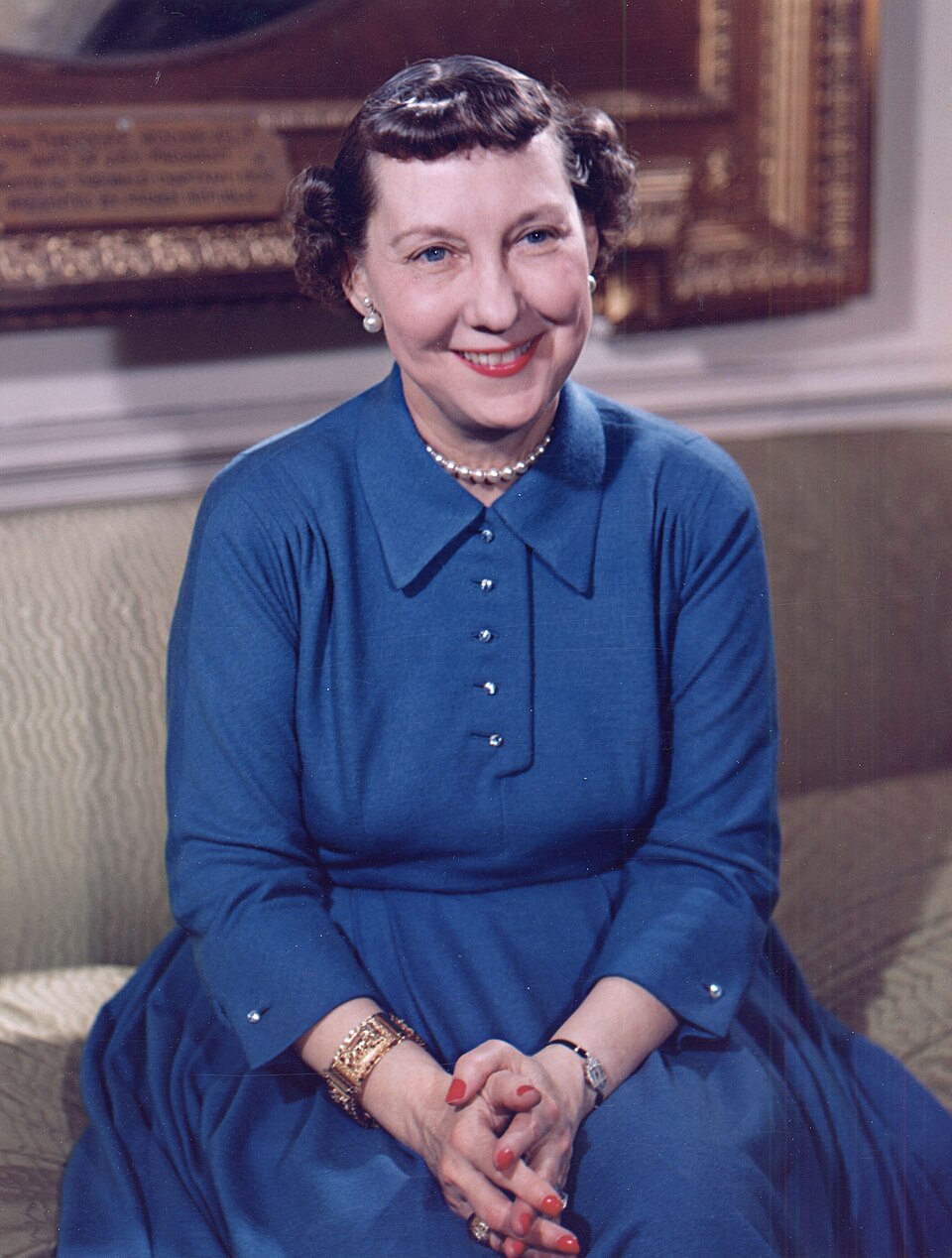
"Mamie Pink" & More: How Eisenhower's First Lady Set Trends
When we recall the 1950s, images of poodle skirts, atomic-age optimism, and a distinct sense of post-war domesticity often come to mind. Yet, no figure quite embodied the era's blend of charm, resilience, and style like Mamie Eisenhower, the 1950s First Lady. Known for her signature shade of pink and an approachable demeanor, Mamie Doud Eisenhower was far more than just the wife of the 34th U.S. President, Dwight D. Eisenhower. She was a trendsetter, a gracious hostess, and a woman whose quiet strength helped define a decade.
Her influence stretched from fashion to the very spirit of the White House, bringing a sense of warmth and normalcy after years of global upheaval. As we delve into the life and legacy of this remarkable woman, we discover how her unique background and personality sculpted her into an unforgettable icon of the American mid-century.
The Formative Years of a Future First Lady
Born Mary Geneva Doud on November 14, 1896, in a quaint yellow house in Boone, Iowa, Mamie's early life was anything but ordinary. She was the second of four daughters to John and Elivera Doud, a wealthy family who had made their fortune in the burgeoning meatpacking industry. This privileged upbringing afforded Mamie and her sisters a life of comfort, though not without its challenges.
The Doud family was quite peripatetic, moving from Iowa to Cedar Rapids when Mamie was just nine months old, then to Colorado in 1905, eventually establishing a social hub at their Denver home on Lafayette Street. They even started wintering in San Antonio, Texas, by 1910. These frequent relocations, while disrupting her formal education at times, inadvertently prepared Mamie for the nomadic life of a future military wife, fostering adaptability and a wide social circle.
Mamie was described as outgoing, vivacious, and the "life of the party." She was the prettiest of the Doud sisters and her father's favorite, affectionately called "Puddy." While spoiled, she was also instilled with the feminine skills considered essential for women of her era, including piano and dancing, even attending a Denver finishing school for a year. Despite her bubbly exterior, Mamie faced personal hardship early on; she was born weighing only four pounds and suffered from a rheumatic heart. Her older sister, Eleanor, also had a heart condition and tragically died at age 17, leaving Mamie devastated. This early experience with loss and personal health struggles quietly forged a layer of resilience beneath her charming facade, hinting at the steel spine behind her 1950s charm.
A Whirlwind Romance and a Life of Service
The Doud family's winter sojourns to San Antonio proved fateful for Mamie. It was there, in 1915, that she met a dashing young Army lieutenant, Dwight "Ike" Eisenhower. The story of their meeting is legendary: while visiting family friends near Fort Sam Houston, Mamie encountered Ike, who was pointed out as a "woman hater." Taking this as a challenge, Mamie engaged him, and the sparks flew. Their courtship was swift and passionate, culminating in their marriage the following year.
Mamie's life then transformed into that of an Army wife, a role demanding immense adaptability and sacrifice. She followed Ike through numerous postings across the United States, Central America, and Asia, managing households and raising their two sons (Doud Dwight, who tragically died in infancy, and John). This period of her life, often overlooked, was foundational. It honed her exceptional organizational skills, her ability to make a home anywhere, and her deep understanding of the military community. She was not merely a supportive spouse but an active partner in navigating the challenges of military life, skills that would prove invaluable when she stepped into the national spotlight as the Eisenhower 1950s First Lady. Her journey from Iowa to influence was truly a testament to her enduring spirit.
"Mamie Pink" and the Quintessential 1950s Style Icon
When Dwight D. Eisenhower assumed the presidency in 1953, Mamie Eisenhower became First Lady, stepping into a role that placed her at the forefront of American public life. She effortlessly embodied the traditional feminine ideals of the 1950s: grace, charm, and an unwavering devotion to her husband. Yet, she did so with a unique flair that made her an unwitting style icon.
Her most famous contribution to the decade's fashion landscape was undoubtedly "Mamie Pink." This specific pastel shade of pink became synonymous with her, frequently appearing in her wardrobe, from her inauguration gown to her everyday ensembles. The phenomenon of "Mamie Pink" wasn't just a personal preference; it became a cultural touchstone. Women across America embraced the color, seeing in it a reflection of the era's optimism and a sophisticated yet accessible femininity. It helped set a cheerful, domestic tone for the White House, signaling a return to a more stable, comfortable America after years of war and austerity.
Mamie's signature style also included her distinctive curled bangs, which became widely imitated. Her elegant dresses and coordinated accessories projected an image of tasteful domesticity that resonated deeply with the American public. She demonstrated that elegance could be approachable, and her personal branding, though perhaps not intentionally crafted, became incredibly powerful. The widespread adoption of "Mamie Pink" is a fascinating case study in how a public figure's personal style can shape popular trends and even define an era's aesthetic.
Beyond the Frills: A Woman of Substance and Resilience
While often remembered for her "frothy appearance" and charming smile, Mamie Eisenhower possessed a quiet strength that belied her seemingly traditional image. The hardships she faced throughout her life – the early death of her sister, her own chronic health issues, the loss of her firstborn son, and the demanding life of a military spouse – forged a profound resilience within her. She brought this inner fortitude to her role as First Lady, navigating the intense scrutiny and rigorous schedule with remarkable grace.
Her ability to host lavish White House events, often despite her own health struggles, showcased her unwavering commitment to her duties. She was renowned for her hospitality, making guests feel welcome and ensuring that the Executive Mansion was a warm, inviting home rather than just a seat of power. This blend of elegance and resilience offered the nation a comforting presence during a period of significant social and political change.
Mamie never forgot her roots, frequently returning to visit Boone, Iowa, demonstrating a groundedness that kept her connected to ordinary Americans. Her birthplace is one of only two First Lady birthplaces designated as National Historic Sites, alongside Abigail Adams' home, a testament to her enduring significance. She was also the second First Lady born in Iowa, following Lou Henry Hoover, connecting her to a legacy of strong Midwestern women.
Practical Insight: Mamie Eisenhower's legacy offers a valuable lesson in personal branding and leadership. Her ability to project warmth, stability, and elegance, while quietly managing personal challenges, demonstrates how authenticity and resilience can be powerful assets in public life. For anyone in a public-facing role, cultivating a distinctive yet authentic persona, much like Mamie did with "Mamie Pink" and her charming demeanor, can foster connection and trust.
Conclusion
Mamie Doud Eisenhower carved out a distinct and indelible place in American history, not just as the wife of a president but as a significant cultural figure in her own right. As the quintessential Eisenhower 1950s First Lady, she brought a much-needed sense of normalcy, warmth, and style to the White House and the nation. From her humble beginnings in Iowa to her commanding presence on the world stage, Mamie's life was a testament to resilience, grace, and an understated influence that continues to captivate historians and fashion enthusiasts alike. "Mamie Pink" may have been her most visible trend, but her enduring legacy is the quiet strength and unwavering charm that helped define an entire era.